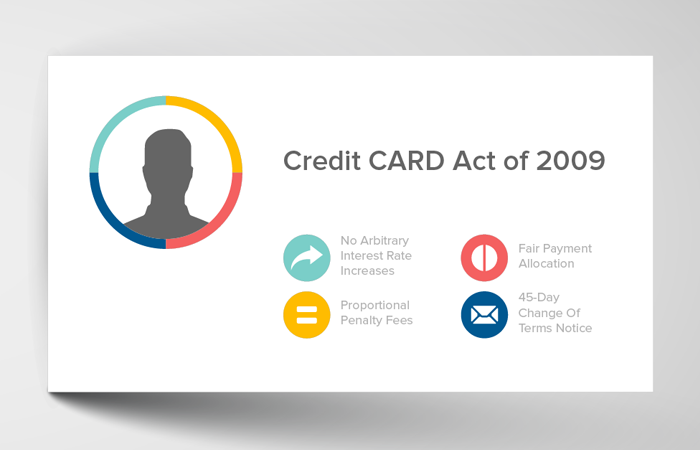
Card Act / The Card Act Works Mathbabe. The credit card accountability responsibility and disclosure act (known simply as the credit card) act served as our country's most robust revamp of credit regulation to date. Here is a brief guide to its history and its 12 biggest consumer protections. The terms for an expiration date must appear conspicuously on the card. The credit card accountability responsibility and disclosure act of 2009, commonly called the card act, is a federal law that fundamentally changed credit card issuers' practices and consumers' rights. The card act is a lengthy, detailed piece of legislation, but the major changes that it brought to the credit card market can be broken down into six general categories which will be discussed in detail below.
Congress passed the credit card accountability responsibility and disclosure act of 2009 a little over a decade ago. On may 22, 2009, the credit card act of 2009 was signed into law by president barack obama. The card act requires financial institutions and businesses to disclose vital information when issuing new credit cards. The credit card accountability responsibility and disclosure act (known simply as the credit card) act served as our country's most robust revamp of credit regulation to date. The credit card accountability responsibility and disclosure (card) act of 2009 provides many new consumer protections for credit cardholders.
The Card Act What It Is New Rules More from cdn.wallethub.com Under current card act regulations, a card issuer generally may only consider the individual card applicant's independent income or assets. 2) authorizes the board of governors of the federal reserve system (federal reserve board) to issue rules and publish model forms to implement this act. The card act requires that card issuers evaluate a consumer's ability to pay before opening a new credit card account or increasing a credit limit. The card act gives increased protections for consumers to receive monthly statements. The payment can't be considered late unless the statement was mailed or delivered to the customer at least 21 days before the due date. The card act is a lengthy, detailed piece of legislation, but the major changes that it brought to the credit card market can be broken down into six general categories which will be discussed in detail below. The credit card accountability responsibility and disclosure (card) act of 2009 provides many new consumer protections for credit cardholders. Credit card companies have to abide by certain rules for handling payments made on an account.
For example, some issuers used this clause to apply the penalty rate when their customers were late on a payment to another credit card.
Critics of the law have noted, however, that because the card act has threatened revenue within the credit card industry, card companies have compensated by simply offering fewer fixed. President barack obama on may 22, 2009. The payment can't be considered late unless the statement was mailed or delivered to the customer at least 21 days before the due date. It was put in place to protect consumers against unfair practices by the credit card industry. Its purpose was to curtail deceptive and abusive practices by credit card issuers. The credit card accountability responsibility and disclosure act (known simply as the credit card) act served as our country's most robust revamp of credit regulation to date. The credit card accountability responsibility and disclosure act of 2009, commonly called the card act, is a federal law that fundamentally changed credit card issuers' practices and consumers' rights. No interest rate increases for the first year credit card issuers generally cannot raise interest rates, or any fees, during the first year an account is View our weekend hours for august if you have issues with your mobile act card after standard business hours, temporary cards are available at uapd (university of alabama police department). It also restricts fees on gift cards and. Overall, the card act is designed to make credit card terms, interest rates, and fees less penalizing, more transparent and more understandable to consumers. Card act, as distinguished from other factors such as the impact of the great recession, contributed to these increases. The card act requires that card issuers evaluate a consumer's ability to pay before opening a new credit card account or increasing a credit limit.
The card act granted greater protection in the purchase and use of electronic cards, gift certificates and store gift cards by requiring expiration dates and limiting fees. The credit card accountability responsibility and disclosure act of 2009, commonly called the card act, is a federal law that fundamentally changed credit card issuers' practices and consumers' rights. President barack obama on may 22, 2009. The issuer is also required to remind you of an upcoming annual fee prior to a card's renewal. No interest rate increases for the first year credit card issuers generally cannot raise interest rates, or any fees, during the first year an account is
What Is Card Act from image.slidesharecdn.com No interest rate increases for the first year credit card issuers generally cannot raise interest rates, or any fees, during the first year an account is Critics of the law have noted, however, that because the card act has threatened revenue within the credit card industry, card companies have compensated by simply offering fewer fixed. The credit card act of 2009 is officially called the credit card accountability responsibility and disclosure act of 2009, but it's also sometimes referred to as just the card act. The payment can't be considered late unless the statement was mailed or delivered to the customer at least 21 days before the due date. If the issuer offers credit insurance, you must be. The credit card accountability responsibility and disclosure act of 2009 (or credit card act) was the most significant legislation regulating and reforming the credit card industry in decades. Under current card act regulations, a card issuer generally may only consider the individual card applicant's independent income or assets. On may 22, 2009, the credit card accountability responsibility and disclosure act was signed into law by president barack obama.
A card issuer must disclose interest rates, grace periods and annual fees.
It was put in place to protect consumers against unfair practices by the credit card industry. Critics of the law have noted, however, that because the card act has threatened revenue within the credit card industry, card companies have compensated by simply offering fewer fixed. The credit card accountability responsibility and disclosure act of 2009 (or credit card act) was the most significant legislation regulating and reforming the credit card industry in decades. A card issuer must disclose interest rates, grace periods and annual fees. President barack obama on may 22, 2009. The card act bans this practice. Its purpose was to curtail deceptive and abusive practices by credit card issuers. No interest rate increases for the first year credit card issuers generally cannot raise interest rates, or any fees, during the first year an account is (b) amends the electronic fund transfer act to address fees and other terms. On oct 1, 2013, we released a report detailing how the credit card accountability responsibility and disclosure act of 2009 (card act) reduced penalty fees and made the cost of credit cards clearer to consumers. View our weekend hours for august if you have issues with your mobile act card after standard business hours, temporary cards are available at uapd (university of alabama police department). The credit card accountability, responsibility, and disclosure act of 2009 is a federal law designed to protect credit card users from abusive lending practices by card issuers. These items can't have an expiration date sooner than five years from the date of purchase.
Critics of the law have noted, however, that because the card act has threatened revenue within the credit card industry, card companies have compensated by simply offering fewer fixed. Senate and house of representatives, on may 22, 2009. Its purpose was to curtail deceptive and abusive practices by credit card issuers. Congress passed the credit card accountability responsibility and disclosure act of 2009 a little over a decade ago. Overall, the card act is designed to make credit card terms, interest rates, and fees less penalizing, more transparent and more understandable to consumers.
Credit Card Debt Act Death Divorce Quick Guide from nomorecreditcards.com It was put in place to protect consumers against unfair practices by the credit card industry. The card act, as it's more commonly known, is a major piece of federal. Congress first passed the bill, which had support from both the u.s. It amends the truth in lending act, the federal trade commission act and the electronic funds transfer act. Universal default was a clause in credit card agreements that allowed the card issuer to raise your interest rate at any time and for any reason. A card issuer must disclose interest rates, grace periods and annual fees. (b) amends the electronic fund transfer act to address fees and other terms. View our weekend hours for august if you have issues with your mobile act card after standard business hours, temporary cards are available at uapd (university of alabama police department).
Under current card act regulations, a card issuer generally may only consider the individual card applicant's independent income or assets.
The credit card accountability responsibility and disclosure act of 2009, commonly called the card act, is a federal law that fundamentally changed credit card issuers' practices and consumers' rights. The card act bans this practice. The card act requires that card issuers evaluate a consumer's ability to pay before opening a new credit card account or increasing a credit limit. Congress first passed the bill, which had support from both the u.s. Critics of the law have noted, however, that because the card act has threatened revenue within the credit card industry, card companies have compensated by simply offering fewer fixed. The credit card accountability responsibility and disclosure (card) act of 2009 provides many new consumer protections for credit cardholders. Under current card act regulations, a card issuer generally may only consider the individual card applicant's independent income or assets. The card act granted greater protection in the purchase and use of electronic cards, gift certificates and store gift cards by requiring expiration dates and limiting fees. In broad terms, the card act curtails certain credit card charges, protects young consumers and makes the true cost of credit more transparent. The credit card accountability responsibility and disclosure act of 2009 (or credit card act) was the most significant legislation regulating and reforming the credit card industry in decades. The credit card accountability responsibility and disclosure act (known simply as the credit card) act served as our country's most robust revamp of credit regulation to date. It also restricts fees on gift cards and. 3) makes this act effective nine months after its enactment.
Share this post
0 Response to "Card Act / The Card Act Works Mathbabe"


0 Response to "Card Act / The Card Act Works Mathbabe"
Posting Komentar